
How to Register a Company in India from Singapore: A Step-by-Step Guide for Foreign Investors

Written by Aishwarya Jaiswal, ACCA
The first question a Singapore founder usually asks me is how quickly the business can be live in India. The honest answer is that incorporation itself is quick, often two to three weeks, and it is done entirely online. What takes the time, and what causes the trouble later, is everything around it: documents that must be notarised and apostilled in Singapore, money that must be brought in and reported in a set order, and a calendar of filings that starts within days of the certificate arriving.
So here’s how I’d work through it, in the order that saves rework. One thing before we start. From 1 April 2026 the Income-tax Act, 2025 has replaced the 1961 Act, so section numbers have changed. Where I mention one, I’ve kept the old reference in brackets. The company names and figures in the examples are illustrative, not real clients.
1. How to register a company in India from Singapore
Begin with the structure, not the paperwork. A Singapore company can enter India through a subsidiary, a branch office, a liaison office or an LLP, but for an operating business the choice is really between two.
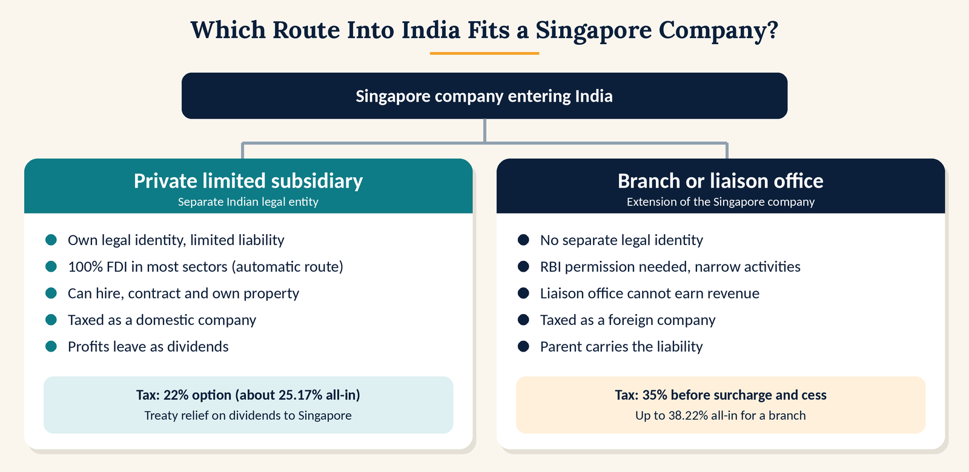
Figure 1: A subsidiary is taxed as a domestic company; a branch is taxed as a foreign company
A private limited subsidiary is a separate Indian legal entity governed by the Companies Act, 2013. It is taxed as a domestic company and may opt for the concessional rate of 22%. A branch or project office is simply part of the Singapore company and is taxed at the foreign company rate of 35% before surcharge and cess, so the gap is significant. A liaison office cannot earn revenue at all. For most Singapore groups that plan to hire people, sign contracts and earn income, the private limited company is the sensible answer.
Before you commit, check four eligibility points:
- Members and directors. A private company needs at least two shareholders and at least two directors.
- A resident director. At least one director must have stayed in India for 182 days or more in the financial year. A board made up entirely of Singapore-based directors does not comply.
- Sector rules. Most sectors allow 100% foreign investment under the automatic route, but some have caps, conditions or a prohibition. Check yours first.
- Who really owns the Singapore parent. Singapore itself raises no flag, but if the ultimate owner of the Singapore company is based in a country that shares a land border with India, government approval may be needed even in an automatic-route sector.
Let’s take an example we’ll follow through this article. Orchid Analytics Pte Ltd, a Singapore data analytics firm, wants a 100% subsidiary in Bengaluru. Its CFO, Mr. Tan, will be a director. Because India needs two shareholders, Orchid holds 99,999 shares and a second Singapore group company holds one share. I prefer that to a nominee individual, because it is cleaner when the shares are later reported and transferred. For the resident director, Orchid appoints an India-based finance head who will stay well beyond 182 days.
2. Incorporation process for Company in India from Singapore
Incorporation is filed on the Ministry of Corporate Affairs (MCA) portal through one integrated form called SPICe+. The order matters, because each step depends on the one before it.
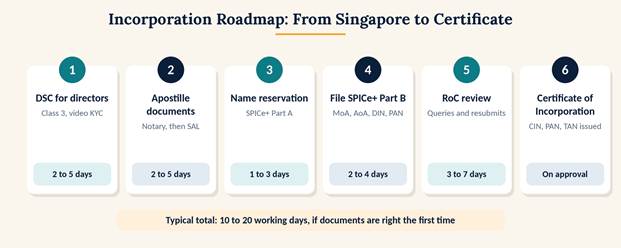
Figure 2: Steps 1 to 3 can run in parallel, which is how the total stays within 10 to 20 working days
- Step 1: Get a DSC for each director. A Digital Signature Certificate is needed to sign the filing, and it must be in hand before SPICe+ can be signed. A foreign director gets a Class 3 DSC from a licensed Certifying Authority, using apostilled documents and a video verification with the original passport.
- Step 2: Authenticate the documents. Singapore documents are notarised and apostilled before upload. Section 8 covers the cost and timing.
- Step 3: Reserve the name (SPICe+ Part A). Propose up to two names. They must be distinctive and must not resemble an existing company or trademark. A rejected name is the most common reason for a lost week.
- Step 4: File SPICe+ Part B. This one form covers incorporation, DIN for up to three directors, and PAN and TAN. The related AGILE-PRO-S form handles GST, EPFO and ESIC registrations, and where applicable professional tax and the bank account request. No separate fee is charged for DIN through SPICe+. If more than three directors need a DIN, the extra ones apply separately through Form DIR-3.
- Step 5: Attach the constitutional documents and declarations. These are the e-MoA (INC-33), the e-AoA (INC-34), the subscribers’ and directors’ declarations (INC-9), the directors’ consent to act (DIR-2), and proof of the registered office.
- Step 6: Pay fees and stamp duty. The government fee depends on the authorised capital, and stamp duty depends on the state where the registered office sits. Karnataka, Maharashtra and Delhi all differ.
- Step 7: RoC review and certificate. The Registrar of Companies either approves or raises queries. On approval you receive the Certificate of Incorporation with the company’s CIN, along with the PAN and TAN.
3. Checklist of documents For Company in India from Singapore
Prepare one complete set before anything is filed. The same identity documents are used for the DSC, the DIN and the incorporation, so a single mistake travels through all three.
From the Singapore parent (corporate shareholder)
| Document | What to know |
| Certificate of incorporation or ACRA business profile | A government-issued public document. It goes to the Singapore Academy of Law for an apostille directly, without notarisation. |
| Constitution (memorandum and articles) | A certified copy, notarised and apostilled. |
| Board resolution | Approves the investment, names the authorised signatory and the nominee directors. Notarised and apostilled. |
| Authorised signatory’s passport and address proof | Passport is mandatory. Address proof should be recent, usually not older than two months. |
| Latest financials or bank reference | Used for the KYC the Indian bank will run on the investor. |
From each foreign director or individual subscriber
| Document | What to know |
| Passport | Valid, showing the photograph and date of birth. Authenticated by notary and apostille. |
| Address proof | Bank statement, utility bill or residence card, recent and matching the passport name. |
| Passport-size photograph and email/mobile | Recent photograph. The mobile and email receive the OTPs, so they must be active. |
| Class 3 DSC | Obtained first, before the SPICe+ filing. |
From the Indian side
- Registered office proof: a rent agreement or sale deed, plus a utility bill not older than two months.
- A no-objection certificate from the property owner.
- The details of the India-resident director, with PAN and address proof.
Most delays come from small mismatches rather than missing papers. The name on the passport, the address proof and the board resolution should be spelled identically. If a middle name appears in one place and not another, expect a query.
4. Income tax rate in India for a Singapore subsidiary
An Indian subsidiary of a Singapore company is a domestic company for tax purposes. It is taxed on its income at domestic company rates, not at the higher rate for foreign companies. Budget 2026 left corporate rates unchanged, and the rates below carry over into the new Act.
| Regime | Base rate | Effective rate, with surcharge and cess |
| Concessional regime (Section 115BAA of the 1961 Act) | 22% | About 25.17%, as surcharge is a flat 10% plus 4% cess |
| Regular regime, turnover up to ₹400 crore | 25% | Roughly 26% to 29%, depending on income |
| Regular regime, other domestic company | 30% | Roughly 31% to 34.94%, depending on income |
| Foreign company (a branch, for comparison) | 35% | Up to 38.22% |
The concessional 22% regime has a trade-off. The company gives up many deductions and incentives, such as certain accelerated depreciation and area-based benefits. In return, minimum alternate tax (MAT) does not apply. For a profitable services or technology subsidiary with few incentives to lose, it usually wins. A manufacturer with large claims should run both calculations before choosing, because the option is made when the return is filed and is hard to reverse.
Let’s put numbers on it. Orchid’s Indian subsidiary earns a taxable profit of ₹10 crore, opts for the 22% regime and distributes all its after-tax profit to Singapore.
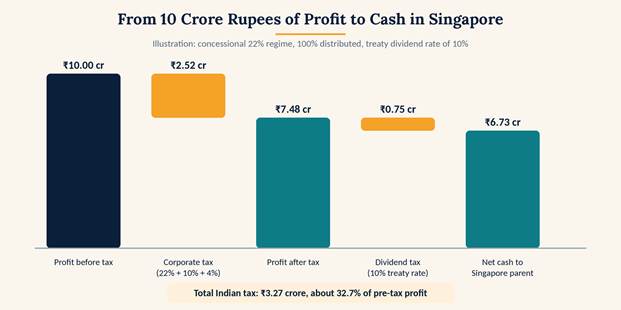
Figure 3: Corporate tax and dividend withholding tax together take about 32.7% of pre-tax profit
Tax at 22% is ₹2.20 crore. Surcharge at 10% adds ₹0.22 crore, and 4% cess on that total adds ₹0.0968 crore. The company’s tax is therefore ₹2.5168 crore, leaving profit after tax of ₹7.4832 crore. India has no dividend distribution tax any more, so the dividend is taxed in the Singapore shareholder’s hands through withholding. Under the India-Singapore treaty the rate is generally 10% where the Singapore company holds at least 25%, and 15% otherwise. At 10%, withholding is ₹0.7483 crore and Singapore receives about ₹6.73 crore.
Remember that this relief is not automatic. To claim treaty rates, the Singapore company should have a tax residency certificate from IRAS, Form 10F and a PAN, and it must satisfy the treaty’s beneficial-ownership and anti-abuse tests. How surcharge and cess interact with the treaty rate is a technical point, so confirm it with your tax adviser before budgeting the repatriation.
Two more tax points often surprise Singapore parents. First, any payment between the subsidiary and the parent, whether management fees, royalties, interest or cost sharing, must be at arm’s length, and the subsidiary files an accountant’s report on international transactions (earlier Form 3CEB) with transfer pricing documentation. Second, GST at 18% applies to most services, but services exported to the Singapore parent can be zero-rated if the conditions are met.
5. Bank account and capital remittance
Money is where foreign investment rules bite hardest, so it’s worth slowing down here.
Opening the account
Open a current account with an Authorised Dealer Category-I bank, which is a bank allowed to deal in foreign exchange. Expect to provide the Certificate of Incorporation, PAN, MoA and AoA, a board resolution, the KYC of the directors and the registered office proof. Banks apply extra diligence to foreign-owned companies and often want to see the Singapore parent’s documents too, so start the application as soon as the certificate arrives. Do not remit funds before the account is open.
Bringing in the capital
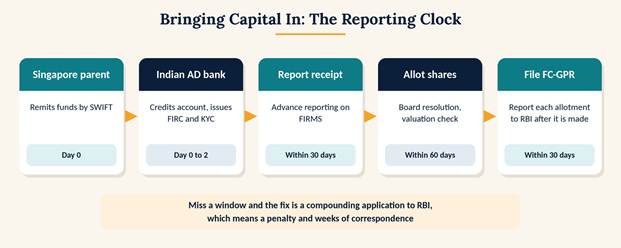
Figure 4: Three clocks run in sequence: report receipt, allot shares, then report the allotment
- Remit through the banking channel. The Singapore parent sends funds by SWIFT, in a freely convertible currency or in rupees, with a clear purpose such as “share application money” and the exact name of the Indian company.
- Collect the FIRC and the KYC. The bank issues a Foreign Inward Remittance Certificate and a KYC report on the remitter. You will need both later.
- Report the receipt. The inward remittance is reported on the RBI’s FIRMS portal within 30 days of receipt.
- Allot the shares promptly. Under the current rules shares are generally to be issued within 60 days of receiving the funds. If they are not, the money must be refunded.
- Price later issues correctly. For later share issues to the Singapore parent, a valuation by a chartered accountant or merchant banker is generally needed, and the issue price cannot be below the fair value.
If the parent prefers to lend instead of subscribing to equity, that falls under the External Commercial Borrowing rules. They have their own conditions and reporting, so don’t treat it as an informal advance.
Now a case study of how this goes wrong. Orchid remitted SGD 400,000 on 10 January. The India team was waiting for a board meeting and a valuation certificate, and nobody had put the allotment date in the calendar. Shares were allotted on 20 March, well past the window. The delay, and the late FC-GPR that followed, meant a compounding application to the RBI, a penalty and several weeks of correspondence. None of it affected the business, but all of it was avoidable. Fix the board meeting date before the money is wired.
6. Post-incorporation FEMA compliance for Singapore Subsidiary Company in India
The Foreign Exchange Management Act, 1999 (FEMA) governs foreign investment, and it is the area where I see the most missed deadlines in foreign-owned subsidiaries. The filings are small, but the penalty regime is not.
| Filing | What it reports | Deadline |
| Advance reporting of receipt | Inward remittance for share subscription, on the FIRMS portal through the bank | Within 30 days of receipt of funds |
| Form FC-GPR | Allotment of shares to the non-resident, with the company secretary’s certificate and valuation where applicable | Within 30 days of allotment |
| FLA return | Annual Return on Foreign Liabilities and Assets, filed on the RBI’s FLAIR portal | By 15 July every year |
| Form FC-TRS | Transfer of shares between a resident and a non-resident | Within 60 days of the transfer |
| ECB reporting | Loans from the Singapore parent, if taken as External Commercial Borrowing | As per the ECB rules |
Two habits help. First, keep the Single Master Form on the FIRMS portal updated after every change, rather than reconstructing it at year end. Second, remember that the FLA return is due even in a year with no new investment, as long as the company has foreign investment on its books. RBI compounding orders regularly show subsidiaries filing the FLA return years late, and each year of delay is a separate contravention.
7. Post-registration compliance for the Singapore subsidiary
Once the certificate arrives, the clock starts. I’d split the work into the first few months and the annual cycle.
In the first six months
| Compliance | Time limit |
| Notice of registered office situation (INC-22) and verification | Within 30 days of incorporation |
| First Board meeting | Within 30 days of incorporation |
| Appointment of first auditor (ADT-1) | Within 30 days of incorporation |
| Issue of share certificates | Within 60 days of incorporation |
| Director disclosures (DIR-8 and MBP-1) | At the first Board meeting |
| Declaration of commencement of business (INC-20A) | Within 180 days, after subscribers have paid for their shares |
Every year
| Compliance | Time limit |
| Statutory audit and Annual General Meeting | AGM within six months of year end (30 September for a March year end) |
| Financial statements (AOC-4) | Within 30 days of the AGM |
| Annual return (MGT-7) | Within 60 days of the AGM |
| Return of loans and receipts (DPT-3) | By 30 June |
| Minimum four Board meetings | Gap of no more than 120 days between two meetings |
| Director KYC (DIR-3 KYC) | Per the current MCA cycle, which recent guidance moves to every three years |
| Beneficial ownership declarations (BEN-1 and BEN-2) | On any change, and within 30 days of a declaration |
Tax and payroll sit alongside these. The subsidiary pays advance tax in instalments, deducts and deposits TDS every month, files quarterly TDS returns, files GST returns, and files its income tax return, usually by 31 October, with an extra month when transfer pricing applies. Do confirm the dates in the current calendar, since the 2025 Act has changed some forms and numbering.
One more point for groups with a December year end. An Indian company must generally follow April to March. If the parent needs a different year for consolidation, the company can seek permission to align, but that has to be raised early, not after the first audit.
8. Notary and apostille documents: cost and timeline
Because both Singapore and India are members of the Hague Apostille Convention, an apostille replaces embassy legalisation. The Singapore Academy of Law (SAL) has been the sole authority issuing Singapore apostilles since 16 September 2021. The process has two parts.
- Public documents issued by a Singapore government body, such as an ACRA extract, go to SAL directly. They do not need a notary.
- Private documents such as a board resolution, a certified copy of the constitution or a passport copy are first notarised by a Singapore notary public, which is a law firm offering notarial services. SAL then issues the apostille on the notarial certificate.
| Item | Who | Indicative cost | Timeline |
| Notarial certificate and witnessing | Singapore notary public | About S$75 per certificate, plus the firm’s fee for execution | 1 to 2 working days |
| Apostille on a notarised document | SAL | S$87.20 per document, including GST | Same day to 2 working days |
| Apostille on a public document | SAL | About S$10.70 per document | Minutes at the counter, or same day |
| Courier to India (if originals are needed) | Courier | Varies | 3 to 7 days |
| Certification of foreign documents in India, where the Certifying Authority asks | Indian CA, CS or CMA | About ₹10,000 to ₹15,000 | 1 to 2 days |
Let’s price a typical package for Orchid: a board resolution, a certified constitution, and passport copies for two directors, plus a second board resolution for the nominee shareholder. That is five private documents. At S$75 for the certificate and S$87.20 for the apostille, each document costs about S$162, so the five come to roughly S$811 before the notary’s own drafting or witnessing fees. With ACRA extracts added at about S$10.70 each, the total is still comfortably under S$1,000 plus professional fees.
Notary charges vary by firm and SAL’s fees are revised from time to time, so ask for a written quote and check the SAL website before you budget. Also note that the apostille is attached to the notarial certificate, so the notary must certify the document in the right capacity, with names matching the passport exactly. A scan is normally what gets uploaded to the MCA portal, but keep the originals safe in case the Registrar or the bank asks to see them.
9. Common challenges to Register company in India from Singapore
- No resident director. The most common structural gap. Without one, you cannot meet the 182-day requirement, so plan a resident nominee or relocate a team member before filing.
- Documents that don’t match. A passport name that differs from the address proof or the board resolution leads to queries from the Certifying Authority, the Registrar and the bank.
- Stale or unsupported registered office proof. Utility bills older than two months and a missing no-objection certificate from the owner are routine causes of resubmission.
- Name rejection. Names too close to an existing company or trademark. Prepare alternatives before filing.
- Slow bank KYC. Foreign-owned structures take longer to onboard. Remitting before the account is ready is the worst outcome.
- Missed FEMA windows. The 30-day and 60-day clocks run quietly in the background. Put them on a calendar the day the funds arrive.
- Sector and ownership surprises. A restricted sector, or a Singapore parent whose ultimate owner sits in a land-border country, can bring in an approval requirement that nobody planned for.
- Assuming the treaty applies. Claiming the 10% dividend rate without the tax residency certificate and Form 10F in hand.
- Weak transfer pricing records. Intra-group charges with no agreement or benchmarking are a classic audit target.
| The short version Choose a private limited subsidiary for an operating business, and make sure one director is resident in India. Get the DSCs and the apostilled documents ready first, then file SPICe+. Open the bank account before you remit, report the funds within 30 days, allot shares within 60 days and file FC-GPR within 30 days of allotment. Budget about 25.17% tax under the 22% regime, claim treaty relief only with proper paperwork, and put the FEMA and Companies Act dates on a single calendar from day one. |
10. Frequently asked questions Register a Company in India from Singapore
Can a Singapore company own 100% of an Indian company?
Yes, in most sectors under the automatic route. Some sectors have caps or need approval, so check yours before filing.
I am a Singapore citizen Do I need to visit India to register company?
Not for incorporation. DSC verification is by video, documents are apostilled in Singapore, and the filing is online. Some banks may ask for a video call or an in-person visit for KYC.
Is there a minimum capital requirement?
There is no statutory minimum paid-up capital for a private company in most sectors, although some regulated sectors have their own minimums. Size the capital to cover set-up costs and the first year of working capital.
Can a Singapore national be the resident director?
Only if they will stay in India for 182 days or more in the financial year. Otherwise appoint an India-resident director.
How long does the whole process take?
Usually 10 to 20 working days for the filing itself, once the documents are ready. Add a few days for notarisation and apostille.
What is the income tax rate for the subsidiary?
Under the concessional regime, 22% plus a flat 10% surcharge and 4% cess, about 25.17% in all. A branch of the Singapore company would pay 35% before surcharge and cess.
Can profits be sent back to Singapore?
Yes, as dividends out of distributable profits, through the authorised dealer bank, with the required CA certificate and remittance forms. Withholding tax applies, generally 10% under the treaty where the 25% holding test is met.
Do we need an audit if the company has no revenue yet?
Yes. Statutory audit, the annual filings and the FEMA returns apply whether or not the company has started trading.
What happens if we miss a FEMA deadline?
The usual route is a compounding application to the RBI, which involves a penalty and a lengthy correspondence. It is far easier to file on time.
| Planning an Indian subsidiary? If you’d like a second pair of eyes before you file, I’m happy to review your structure, document list and remittance plan, and to build the compliance calendar for the first year. A short conversation at this stage usually saves weeks later. Get in touch: +91 80555 66789 , office@anbca.com |
Aishwarya Jaiswal, ACCA
This article is intended for general informational purposes only and does not constitute tax, legal or professional advice. Rates, section references, fees, forms and timelines are based on our understanding of the provisions applicable for tax year 2026-27 and may be subject to change. The company names and figures used in the examples are illustrative. Readers are advised to verify the applicable laws or consult a qualified professional adviser before taking any action based on their individual circumstances.