
Resignation of a Foreign Director from an Indian Private Company

Global businesses often put an overseas executive or nominee of the parent company on the board of their Indian subsidiary. Sooner or later, that person moves on: a job change, a restructuring, a retirement, or simply a change of plan at head office. The question every founder, company secretary and finance head then asks is the same: what exactly must we do when a foreign director resigns?
The good news is that Indian law treats a foreign director exactly like any other director when it comes to resignation. The less obvious news is that a few easy-to-miss rules, especially the resident director requirement and the 30-day filing deadline, can turn a simple exit into a compliance problem. This guide walks through it all in plain language.
| Key takeaways Resignation is a right. The Board cannot reject it. It only needs to take note of it. The company must file Form DIR-12 with the Registrar of Companies (ROC) within 30 days. The director may also file Form DIR-11 within 30 days. It is optional but a smart safety net. Check the board before you accept the exit: at least 2 directors, and at least 1 resident in India. |
1. The legal framework for Foreign Director Resignation
Resignation of directors is governed by Section 168 of the Companies Act, 2013, read with Rules 15 and 16 of the Companies (Appointment and Qualification of Directors) Rules, 2014. The company’s duty to report changes in its directors sits in Section 170 and Rule 18.
- Written notice: a director may resign by giving notice in writing to the company.
- Effective date: the resignation takes effect from the date the company receives the notice, or the date stated in the notice, whichever is later.
- No acceptance needed: the law gives no one the power to refuse. The Board simply notes the resignation, usually at its next meeting.
- Nationality is irrelevant: there is no special form or procedure for a foreign national. What differs is the practical side: signatures, digital certificates, time zones and cross-border payments.
2. Steps for Resignation of a Foreign Director from an Indian
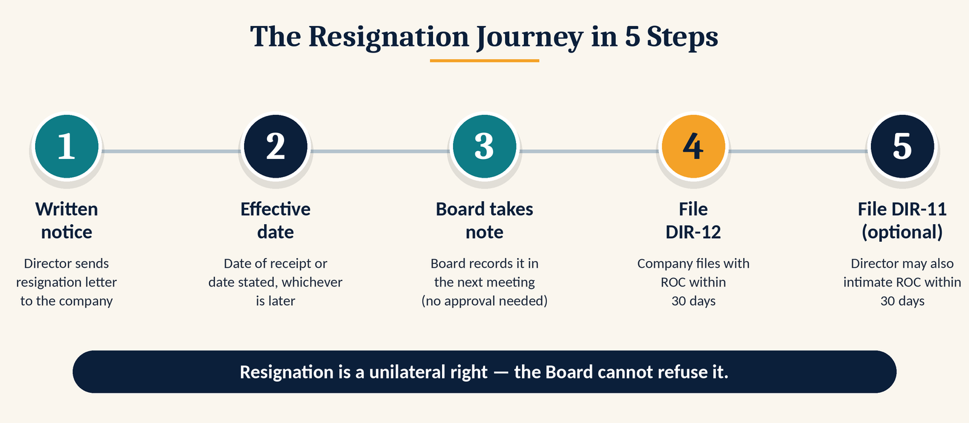
Figure 1: From resignation letter to ROC filing
Step 1: The resignation letter
The foreign director should send a signed letter addressed to the Board (or the company) stating clearly that they resign as a director, and the date from which it should be effective. Include the company name, CIN, the director’s name and DIN. Send it by email and keep proof of dispatch, such as a courier receipt. The Companies Act does not require notarisation or apostille of the letter, though a bank or another counterparty may ask for extra formalities.
Step 2: Fix the effective date
This date matters more than people think, because it starts the 30-day clock for every filing. If the director’s letter says the resignation is effective on 15 November but the company only receives it on 20 November, the later date governs.
Step 3: Board takes note
The Board should record the resignation in its minutes and pass a short resolution taking it on record. This is not an approval; it is a documented acknowledgement. The company should also update its Register of Directors under Section 170.
Step 4: Company files Form DIR-12
The company must file e-Form DIR-12 on the MCA portal within 30 days of the effective date, attaching the resignation letter and the Board’s record of it. This is mandatory, and it is the filing that actually removes the director from the public record.
Step 5: Director files Form DIR-11 (optional)
Until 2018 this filing was compulsory. Following the Companies (Amendment) Act, 2017, effective from 7 May 2018, it became optional. It is still worth doing: DIR-11 gives the director an independent record on the MCA portal, with reasons for leaving, if the company is slow or fails to file DIR-12.
A foreign director who has no Indian digital signature can authorise a practising Chartered Accountant, Company Secretary, Cost Accountant or a resident director of the company to sign and file DIR-11 on their behalf. Remember to keep the written authorisation on file.
3. Two rules to check before Resignation of a Foreign Director
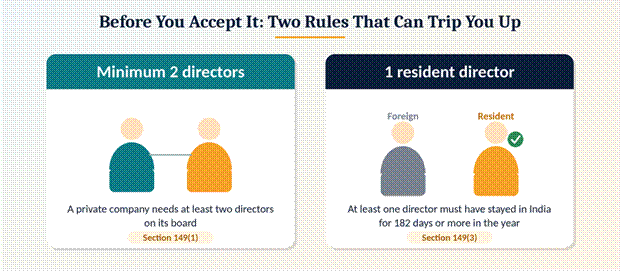
Figure 2: Board composition rules that apply to private companies
A resignation takes effect no matter what, so the company cannot hold it back. But it can, and must, plan ahead so that the board stays legally valid once the director leaves.
- Minimum two directors (Section 149(1)). A private company needs at least two directors. If the foreign director’s exit would leave only one, the company needs a replacement quickly.
- At least one resident director (Section 149(3)). At least one director must have stayed in India for a total of 182 days or more in the financial year. If the departing foreign director was your only non-resident, this rarely bites. But if the foreign director was one of two directors and the other is also abroad, the company may fall short of this requirement.
- If every director resigns. The law provides that the promoter, or failing that the Central Government, can appoint the required number of directors until the shareholders do so at a general meeting.
Replacing a director means the new person needs a DIN, a written consent to act as director, and the company must file DIR-12 for the appointment too. Start this paperwork in parallel with the resignation, not after it.
4. The 30-day clock and the cost of delay
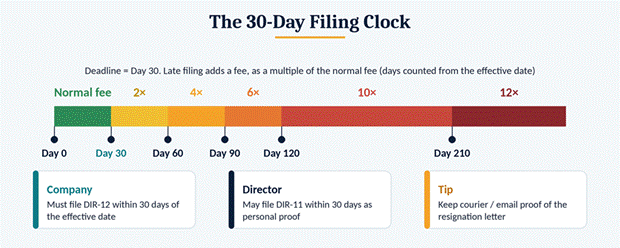
Figure 3: Additional-fee multiples for late filing (indicative; check the current MCA fee schedule)
Both the company’s DIR-12 and the director’s DIR-11 are due within 30 days of the effective date. File late and the ROC charges an additional fee, expressed as a multiple of the normal fee: two times for delays of up to 30 days, rising in steps to twelve times beyond 180 days. The normal fee depends on the company’s authorised share capital, so check the current schedule on the MCA portal before you file.
| Why DIR-11 is your insurance policy If the company never files DIR-12, the MCA records may keep showing the resigned person as a director. They could then be exposed to disqualification consequences if the company defaults on its annual filings, even though they left long ago. A DIR-11 filed in time gives the director proof of exit that does not depend on the company’s cooperation. |
5. Form Filing for Resignation of a Foreign Director
| Task | Company | Resigning director |
| Written resignation | Acknowledge receipt, note the date | Send signed letter with DIN and effective date |
| Board record | Note it in minutes; update Register of Directors | None required |
| Form DIR-12 | Mandatory, within 30 days | None |
| Form DIR-11 | None | Optional, within 30 days; can be signed by an authorised professional |
| Replacement director | Appoint, if the 2-director or resident rule is at risk | Nominating parent may propose a successor |
6. Special points for foreign directors
Signatures and authorisation
Foreign directors frequently do not hold an Indian digital signature certificate. Plan for this early. Have the director sign a clear authorisation letter so a resident director or a practising professional can handle the MCA filings.
Final fees and payments
If the director is owed sitting fees, remuneration or an exit payment, remitting money abroad usually involves tax withholding and the Form 15CA/15CB process. Your finance team or auditor should confirm the correct treatment under the Income-tax Act and any applicable tax treaty before paying.
Shareholding is a separate matter
A director who also holds shares does not give up those shares by resigning. Share transfers follow their own rules, including foreign exchange regulations and filings. Treat the two exits as separate workstreams.
Liability for the past
Resigning ends the office, not responsibility for what happened during it. A director can still answer for offences or defaults that occurred during their tenure. Good board records, up-to-date filings and clean handover documents protect everyone.
DIN stays with the person
The Director Identification Number belongs to the individual for life. A foreign national who still holds a DIN should keep it active and keep complying with DIN KYC requirements, especially if they hold other directorships in India.
7. Foreign Director Post-resignation checklist
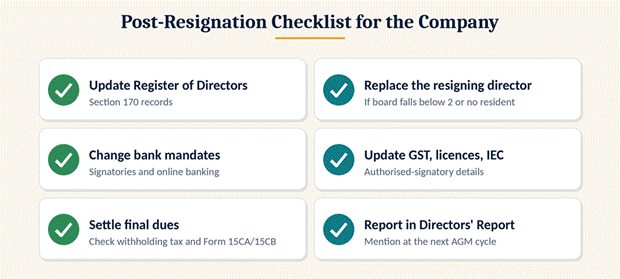
Figure 4: A practical to-do list for the company secretary
8. Common mistakes to avoid
- Waiting for the Board to “accept” the resignation. There is no acceptance. The effective date is set by the notice.
- Missing the 30-day deadline. Late fees climb quickly and the public record stays wrong in the meantime.
- Forgetting the resident director rule. Check board composition before the exit date.
- Leaving bank and regulatory records unchanged. Old signatories on bank mandates, GST and licence records create risk.
- Not keeping proof. Preserve emails, courier receipts, the Board minutes and the filed forms.
9. Quick FAQs
Can a foreign director resign by email?
Yes, if the company receives written notice. A scanned signed letter attached to an email is common practice. Keep the email trail as proof.
Can the company refuse to accept the resignation?
No. Section 168 gives the company no power to reject a director’s resignation.
Is DIR-11 compulsory?
No, not since 7 May 2018. But the company’s DIR-12 is compulsory, and filing DIR-11 as well is strongly advisable.
Does a Board meeting have to be held?
The Board must take note of the resignation. Many companies do this at the next scheduled meeting, so check your timeline against the 30-day filing deadline.
Conclusion
Handling the resignation of a foreign director is straightforward once you know the sequence: written notice, effective date, board note, DIR-12 within 30 days, and, for the director, a protective DIR-11. The real risk lies in what surrounds the exit: board composition, cross-border signatures and payments, and housekeeping with banks and regulators. A little planning before the director leaves saves a lot of reworks after.
Written by: –
Aishwarya. Jaiswal
ACCA