
Tax on Salary Paid to a Foreign Director in India
Written by Aishwarya Jaiswal, ACCA
31 October 2026. Tax Year 2026-27
Even so often a finance team gets the same message from head office: a new director is joining the Indian company, he or she lives abroad, and could we please sort out the pay? It sounds like a simple payroll job. It rarely is. Behind that one question there are usually four or five smaller ones, and if you answer them in the wrong order, you end up with the wrong TDS, an unhappy director and a notice a year or two later.
So, here’s how I’d think it through, in the order that helps. One thing before we start. From 1 April 2026 the Income-tax Act, 2025 has replaced the 1961 Act, which is why you’ll see new section numbers below. I’ve put the old ones in brackets, because that’s still what most people search for.
1. Start with the capacity, not the amount
The first thing to settle is what the director is being paid for. A director can wear two very different hats.
An executive (whole-time) director works for the company day to day, usually under an employment contract. What this person earns is salary in the eyes of the tax law, and the company must deduct tax every month under Section 392 (earlier Section 192) at slab rates.
A non-executive director turns up for board meetings and gets sitting fees or perhaps a commission. That is not salary. When it goes to a non-resident, withholding falls under Section 393 (earlier Section 195), and the default is a flat 30% plus surcharge and cess, unless a tax treaty brings it down.
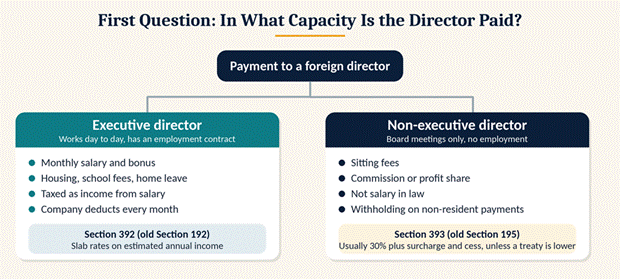
Figure 1: The label on the payment decides the section, and the section decides the rate
The gap between those two treatments can be large, so don’t leave it to chance. The tax treatment follows what the person really does, but your appointment letter, board resolution and payroll setup should tell the same story. If a so-called non-executive director is in the office every day, expect questions.
2. Residency Decides Tax on Salary Paid to a Foreign Director
Once you know it’s salary, the next question is where the director is resident for tax purposes. This isn’t about passports or visas. It’s about days.
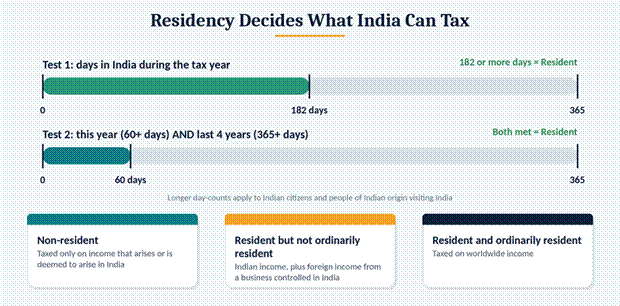
Figure 2: The two day-count tests for residency in a tax year
A person is resident in India if they spend 182 days or more here in the tax year. There is a second route: 60 days or more in the year, together with 365 days or more across the previous four years. Meet either one and you are resident. (If the director is an Indian citizen or a person of Indian origin who is visiting India, longer thresholds apply, so check that before you assume anything.)
Resident people then split into two groups. A resident who has been abroad for most of the last decade is usually “not ordinarily resident”, which in practice means India doesn’t tax their foreign income unless it comes from a business controlled from India. Everyone else who is resident is taxed on worldwide income.
For the typical expatriate who has just arrived, the first year is often non-resident, and the picture changes once the day count builds up. Track the days from the first week. Reconstructing them two years later from old tickets is miserable.
3. What counts as Indian salary for a non-resident
A non-resident is taxed in India only on income that arises or is treated as arising here. For salary, the test is simple: where was the work done? Salary for services rendered in India is taxable in India, even if it is credited to a bank account in Singapore or Frankfurt and even if the paying entity is foreign. Salary for work genuinely done outside India generally isn’t.
In practice, directors split their time. The cleanest approach is to keep a simple log of days worked in India and days worked elsewhere, and to apportion the pay on that basis. Paid holidays and weekends that fall inside a period of Indian service are normally treated as part of that service, so they don’t get to be “foreign days”.
4. Tax Rate for Tax on Salary Paid to a Foreign Director
Since the new regime became the default, most salaried individuals are assessed under it unless they opt out. For Tax Year 2026-27 the slabs are:
| Taxable income (₹) | Rate |
| Up to 4,00,000 | Nil |
| 4,00,001 to 8,00,000 | 5% |
| 8,00,001 to 12,00,000 | 10% |
| 12,00,001 to 16,00,000 | 15% |
| 16,00,001 to 20,00,000 | 20% |
| 20,00,001 to 24,00,000 | 25% |
| Above 24,00,000 | 30% |
A few things sit on top of the slabs. There is a standard deduction of ₹75,000 on salary. Surcharge applies when income crosses ₹50 lakh (10% up to ₹1 crore, rising after that). Then comes 4% health and education cess on the total. One more point that surprises people: the rebate that makes income up to ₹12 lakh tax-free for residents is not available to non-residents, so a non-resident director starts paying tax from the first rupee above the ₹4 lakh slab.
The old regime is still there as an option, with its deductions and exemptions. Most expatriates won’t have many of those deductions to claim, so the new regime usually wins, but it costs nothing to run both calculations once.
5. Calculation – Tax on Salary Paid to a Foreign Director
Let’s make it concrete. Take Mr. Weber, an executive director from Germany, who is a non-resident for the year and is paid ₹60 lakh for work done entirely in India. We’ll assume he has no other Indian income and no other deductions.
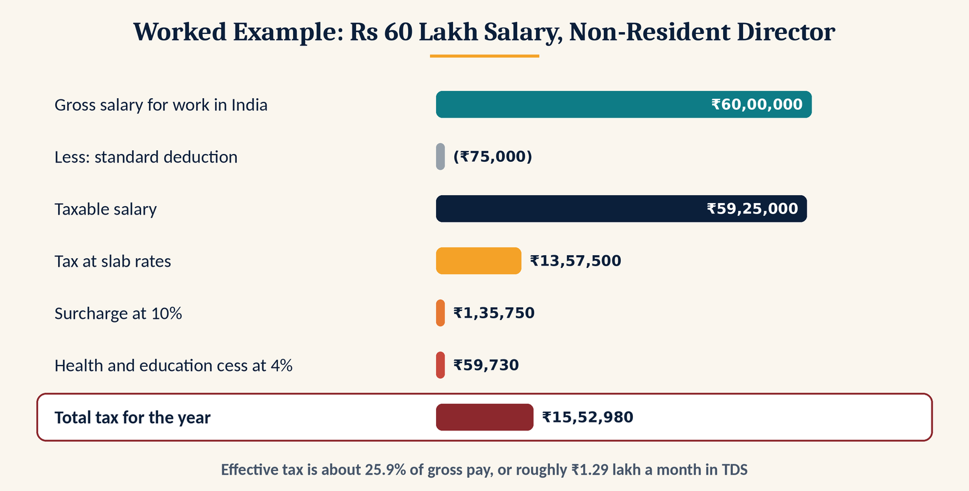
Figure 3: Tax on ₹60 lakh of Indian salary under the new regime
Taxable salary after the standard deduction is ₹59,25,000. Slab tax comes to ₹13,57,500. Surcharge at 10% adds ₹1,35,750, and 4% cess on that total adds ₹59,730. The full year’s tax is ₹15,52,980, which is about 25.9% of the gross pay. The company would therefore withhold roughly ₹1.29 lakh a month.
You’ll notice nobody applied a treaty or any special relief here. That’s deliberate, because a lot of people assume a treaty will rescue them. Which brings me to the next part.
6. Treaties help, but not as often as people hope
India has tax treaties with most countries that send directors here. Two articles usually matter. The employment article lets a visitor escape Indian tax on salary if they stay fewer than 183 days, and the employer is not a resident of India, and the cost isn’t borne by an Indian entity or permanent establishment. The directors’ fees article, on the other hand, generally lets the country where the company is resident tax directors’ fees.
For a director employed by the Indian company itself, the second condition fails straight away, so the employment article doesn’t help. Even where a foreign parent pays the salary and simply recharges the Indian company, the tax authorities and courts have often looked at who really bears the cost. If you do want to claim treaty benefits, collect the paperwork early: a tax residency certificate from the home country, Form 10F, and a PAN.
It’s also worth remembering that tax paid in India can usually be claimed as a credit in the director’s home country. That’s a conversation for the director’s own adviser, but it’s a useful one to prompt.
7. What the company must do
- Deduct tax every month on the estimated annual salary, using the average rate. The director’s choice between the new and old regime should be recorded at the start.
- Convert foreign currency properly. If any part of the pay is in a foreign currency, convert it at the SBI telegraphic transfer buying rate on the date of deduction.
- Get the PAN first. Without a PAN, tax is deducted at a higher rate, generally 20%, and that’s an avoidable cost.
- Include the perks. Rent-free housing, school fees, club memberships and home-leave tickets all must be valued under the perquisite rules and added to the salary.
- Watch the “net of tax” promise. If the contract says the company will bear the director’s tax, the tax paid on the director’s behalf is itself an additional benefit. The salary must be grossed up, and a ₹60 lakh net package can cost far more than ₹60 lakh.
- Deposit and report on time. TDS is due by the 7th of the following month, followed by the quarterly return and the salary certificate.
8. Two things that sit outside income tax
Provident fund
Foreign employees are often treated as “international workers” for provident fund purposes, which can mean contributions on the full salary without the usual wage ceiling. A few countries have social security agreements with India that allow an exemption through a certificate of coverage. Ask your payroll provider to check this early, because it affects the cost to the company.
Return filing
TDS doesn’t replace the director’s own return. A non-resident with taxable Indian income should file a return, usually by 31 July after the year ends, and claim credit for the tax deducted. It’s also the safest way to put on record that the position was reported correctly.
9. Slip-ups I’d watch for
- Treating every payment to a director as one bucket, when salary and director’s fees follow different rules.
- Losing track of the day count, and with it the residency status.
- Forgetting perquisites, or forgetting that tax borne by the company is itself a perquisite.
- Assuming a treaty applies without a tax residency certificate in hand.
- Starting payroll before the PAN is ready.
| The short version Work out the capacity first: salary or director’s fees. Then check residency. For a non-resident, only salary for work done in India is taxed here. Deduct tax monthly at slab rates with surcharge and cess, use treaties only with proper paperwork, and make sure the director files a return. |
10.Does a Foreign Director Need to File an Indian Income Tax Return?
Yes, a foreign director may be required to file an Indian income tax return, depending on the nature and amount of income earned in India.
Under the Income-tax Act, 1961, a non-resident individual is generally required to file an income tax return if their total income taxable in India exceeds the basic exemption limit applicable to them.
For non-resident individuals, the basic exemption limit under the default tax regime is ₹4 lakh for FY 2025-26 (AY 2026-27). However, the applicable limit and filing requirements should be checked for the relevant financial year.
Taxability of Salary Paid to a Foreign Director
The taxability of remuneration paid to a foreign director depends on the nature of the payment, the residential status of the director and where the services are rendered.
- Salary for services rendered in India: Salary paid to a foreign director for services performed in India is generally taxable in India, irrespective of whether the payment is made by an Indian or foreign company.
- Salary for services rendered outside India: Salary for services performed outside India is generally not taxable in India in the hands of a non-resident, subject to the applicable provisions of the Income-tax Act and the relevant DTAA.
- Director’s sitting fees: Sitting fees and other remuneration received by a non-resident director from an Indian company are generally taxable in India. The applicable tax rate and withholding obligations should be determined based on the nature of the payment and the relevant provisions of the Act and DTAA.
Is an Indian Income Tax Return Mandatory for a Foreign Director?
A non-resident director may be exempt from filing an Indian income tax return under Section 207(8) of the Income-tax Act, 2025, subject to the prescribed conditions.
The exemption generally applies where the non-resident’s income consists of specified income, such as dividends, interest, royalties or fees for technical services, and tax has been deducted at the prescribed rates.
However, director’s remuneration and sitting fees are not covered by this exemption.
Therefore, a foreign director receiving taxable remuneration from an Indian company may be required to file an Indian income tax return if the applicable filing conditions are satisfied.
Even where filing is not mandatory, the director may choose to file a return to claim a refund of excess TDS.
Frequently Asked Questions (FAQs)
1. Is salary paid by a foreign company taxable in India?
Salary paid by a foreign company may be taxable in India if the recipient is a resident of India.
For a non-resident, salary is generally taxable in India if the services are rendered in India or the salary is received or deemed to be received in India, subject to the applicable provisions of the Income-tax Act and the relevant DTAA.
2. Is salary earned outside India exempt from tax in India?
Salary earned for services rendered outside India is generally not taxable in India in the hands of a non-resident.
For a resident and ordinarily resident individual, foreign salary is generally taxable in India, subject to any applicable exemption or relief under the Income-tax Act and the relevant DTAA.
3. What is a Double Taxation Avoidance Agreement (DTAA)?
A DTAA is an agreement between two countries intended to prevent the same income from being taxed twice.
Depending on the applicable treaty, a taxpayer may be eligible for tax relief through an exemption or foreign tax credit.
4. Does a foreign director need to report foreign salary in an Indian income tax return?
A foreign director who is a non-resident is generally required to report only income taxable in India.
A resident individual may be required to report foreign salary in the Indian income tax return, even where relief or exemption is available under the relevant provisions.
5. How should foreign salary be converted into Indian rupees for tax purposes?
Foreign salary must be converted into Indian rupees using the applicable exchange rate prescribed under the Income-tax Rules.
The rate and conversion date depend on the nature of the income and the relevant tax provision. The RBI reference rate may be relevant, but the applicable prescribed rate should be verified before computing taxable income.
Conclusion
The taxability of salary paid to a foreign director in India depends primarily on the director’s residential status, the location where services are rendered and the nature of the remuneration.
An Indian company paying remuneration to a foreign director should carefully evaluate its TDS obligations under the Income-tax Act and the applicable DTAA. The director should also determine whether an Indian income tax return is required to be filed based on the nature and amount of income earned in India.
Final thoughts
None of the individual rules here is very complicated. The trouble comes from how they stack up: capacity, residency, source of income, treaty, perquisites and payroll all touch the same payment. If you take the questions one at a time, as above, it becomes manageable. And if the numbers are large, or the director moves between countries during the year, it is worth getting a second pair of eyes on it before the first payslip goes out.
Aishwarya Jaiswal, ACCA
This article is intended for general informational purposes only and does not constitute tax or professional advice. Tax rates, section reference and procedures are based on our understanding of the provisions applicable for tax year 2026-2027 and maybe subject to change. Readers are advised to verify the applicable laws or consult a qualified Chartered Accountants before taking any action based on their individual circumstances.